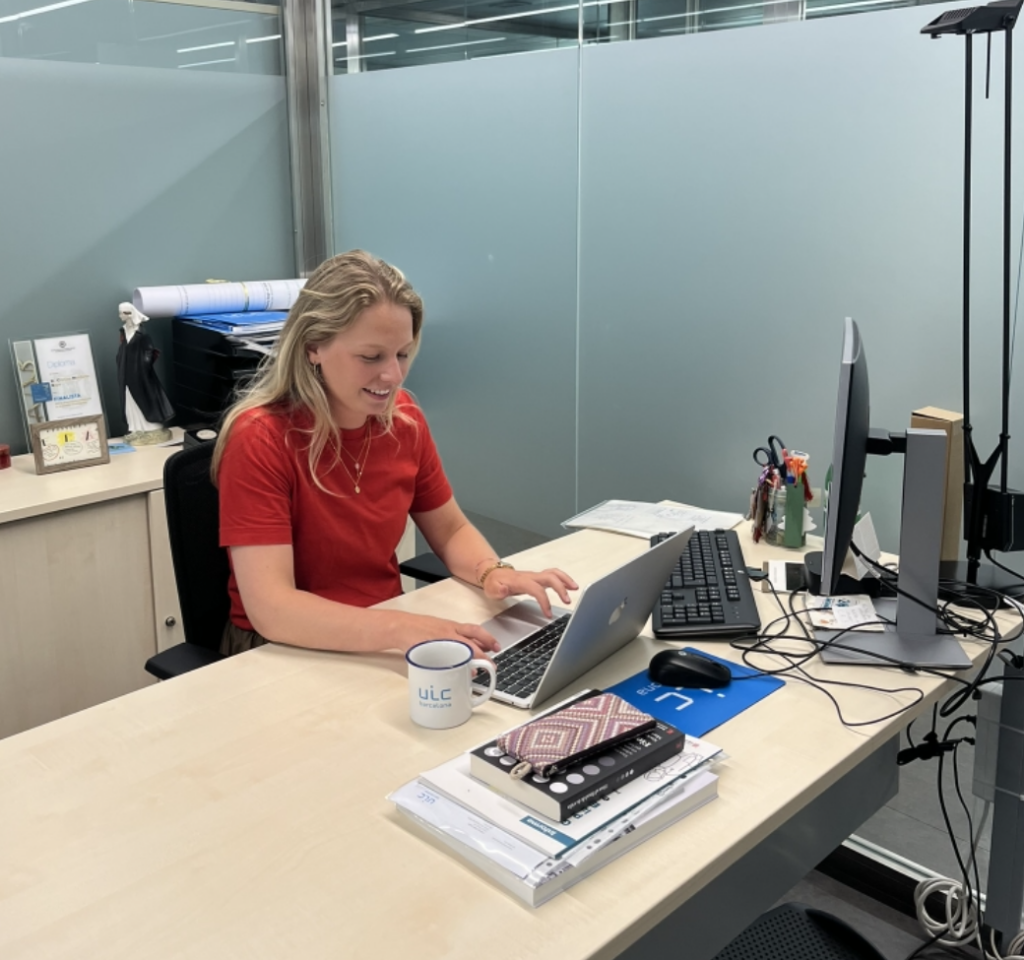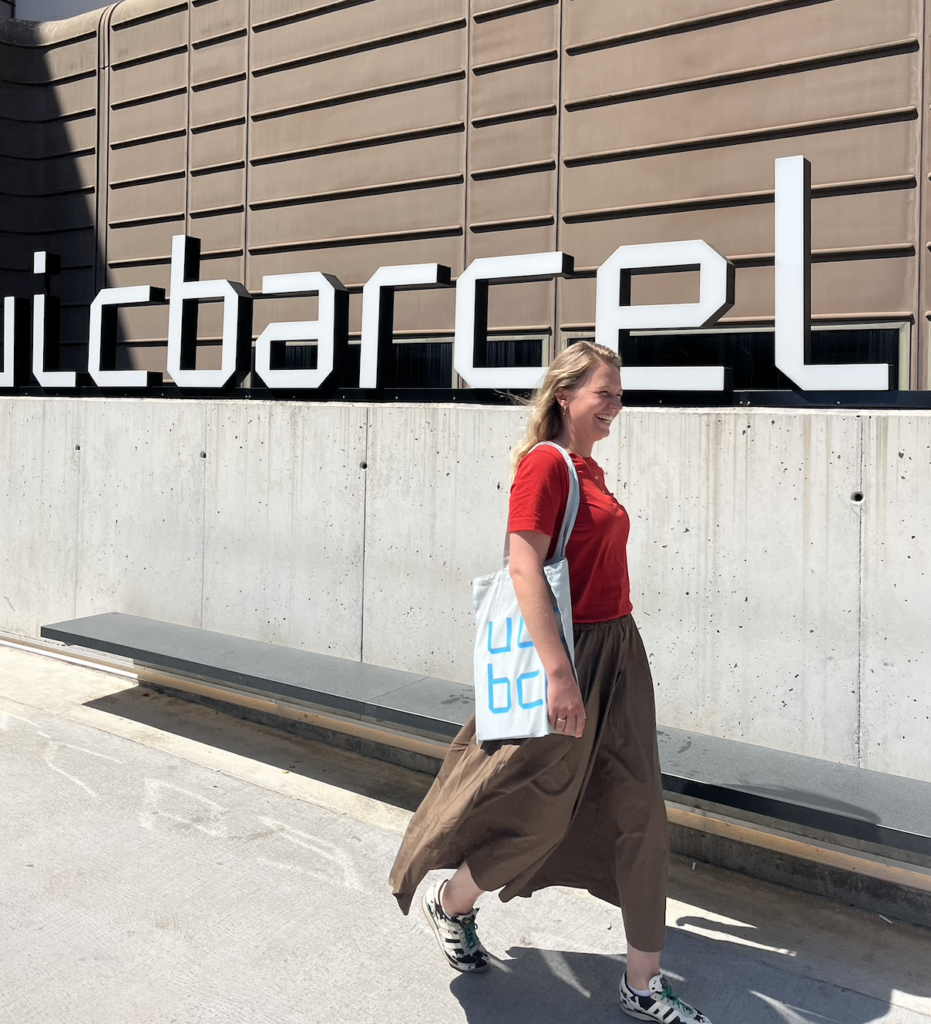
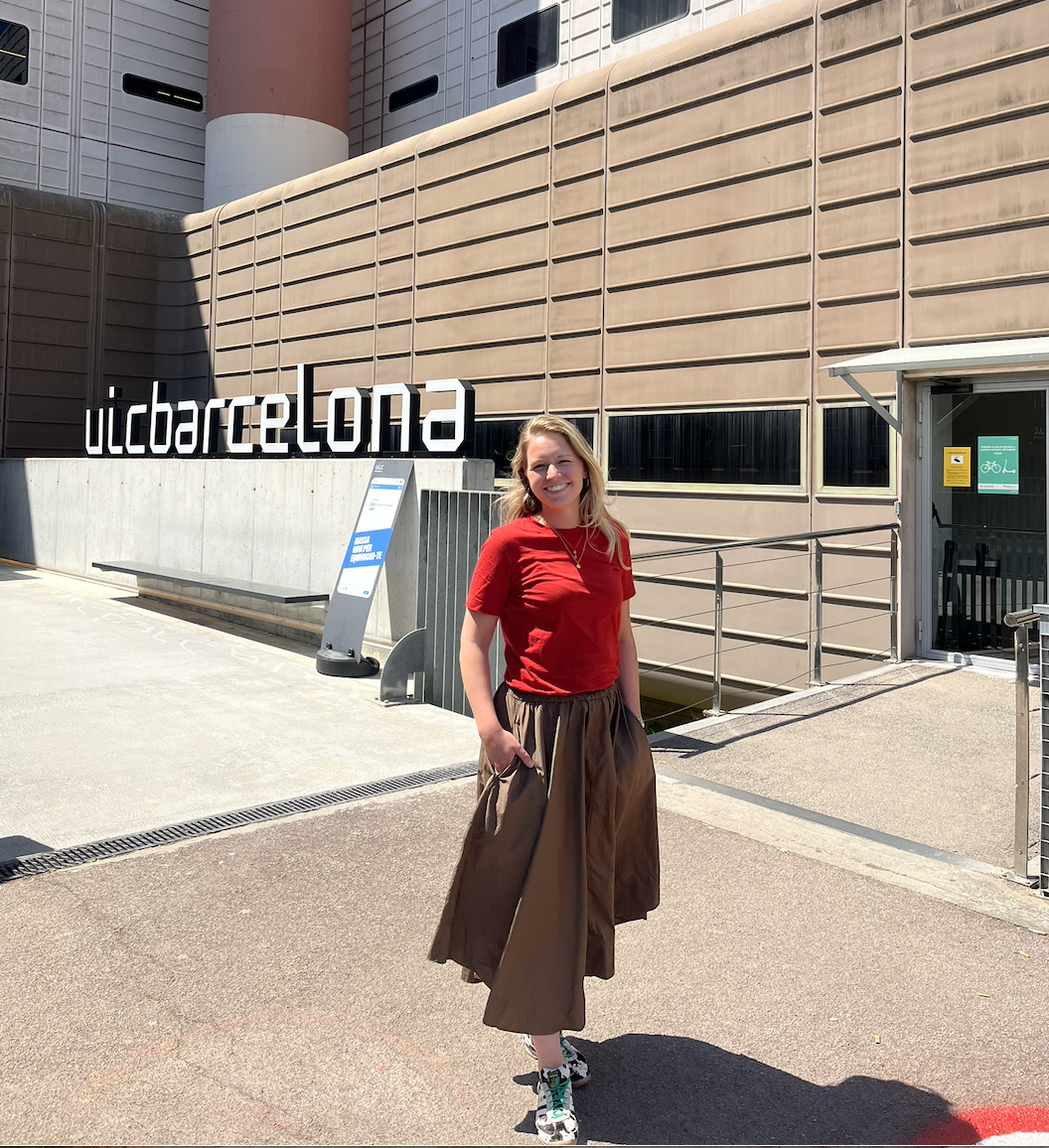
Since February, the WeCare Chair has welcomed Ellenoor, a master’s student in Nursing Science at Utrecht University and a community nurse in the Netherlands. In her professional practice, Ellenoor works as a district nurse, providing care in patients’ homes: from wound care and medication management to palliative care and support to help people maintain their independence.
During her stay in Barcelona, Ellenoor has been developing her master’s research project within the framework of the European RAPHAEL study, an international research project focused on an e-health and palliative care intervention for patients with heart failure. Her project is specifically linked to the feasibility phase of the study, which is being carried out in nine European countries.
Her research focuses on the underrepresentation of women in clinical trials on heart failure. As she explains, although heart failure affects both men and women, women often represent only around 30% of the sample in many studies. This may lead to findings based mainly on male participants being generalized to women, without sufficiently considering their specific needs.
Ellenoor emphasizes that this issue is particularly relevant in a context where person-centred care is becoming increasingly important. To move towards more equitable clinical practice, she believes that this perspective must also be incorporated from the very beginning of the research design. Her work explores not only the gender distribution of the people invited to participate in the feasibility phase, but also the factors that may influence their decision to participate or not, such as inclusion criteria, comorbidities, the perceived burden of the study, or personal circumstances.
Her interest in women’s health and sex- and gender-sensitive research began in 2019, after reading a book by a Dutch cardiologist on the differences between male and female hearts. Years later, while working in a cardiology department, she realized that much of this knowledge had still not fully reached clinical practice. This experience motivated her to start a research master’s degree, with the aim of helping to bridge the gap between scientific evidence and clinical care.
Her stay in Barcelona has allowed her to become part of an international research environment and to gain first-hand insight into the complexity of coordinating a multicentre European study. For Ellenoor, this experience has been highly valuable both academically and personally: it has confirmed her interest in continuing her path in research, especially in the fields of women’s health and gender-sensitive care.
As a message to other students and early-career researchers, Ellenoor encourages them to take advantage of international opportunities, step out of their comfort zone and continue asking critical questions about gender differences in health. For her, every professional who takes this issue seriously contributes to moving towards more equitable, personalized and higher-quality care for everyone.