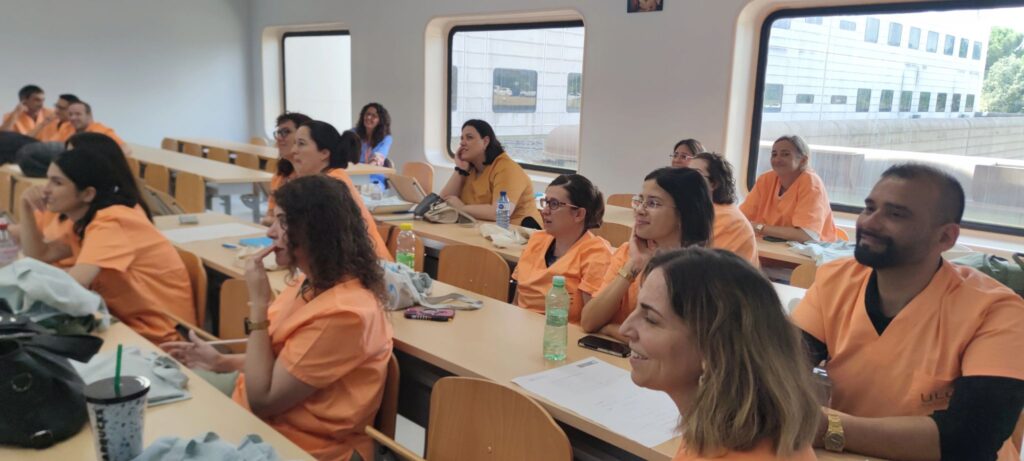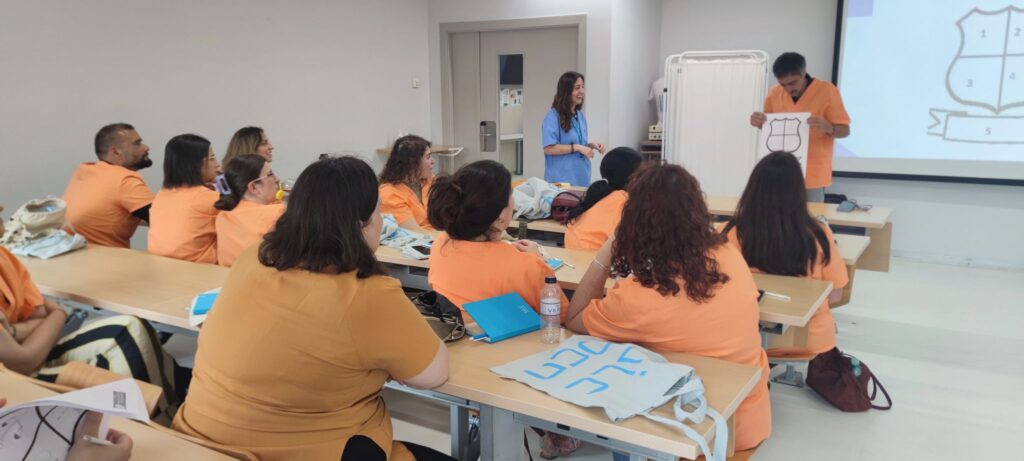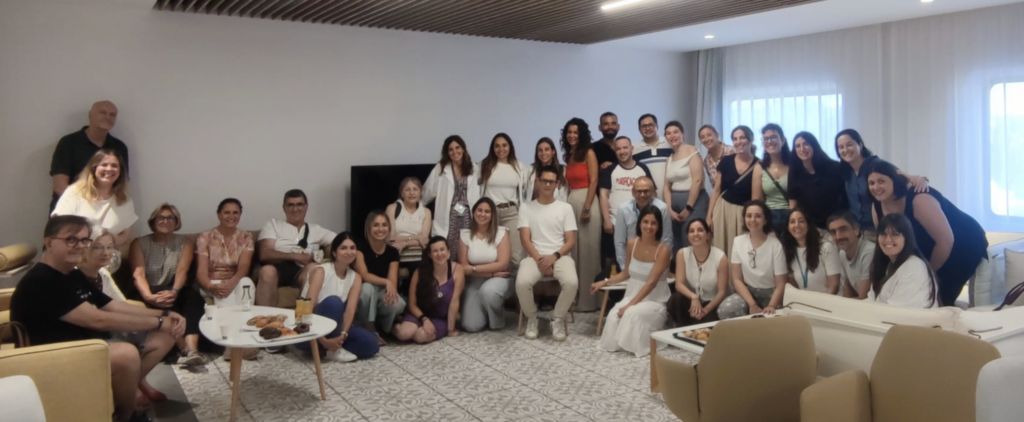
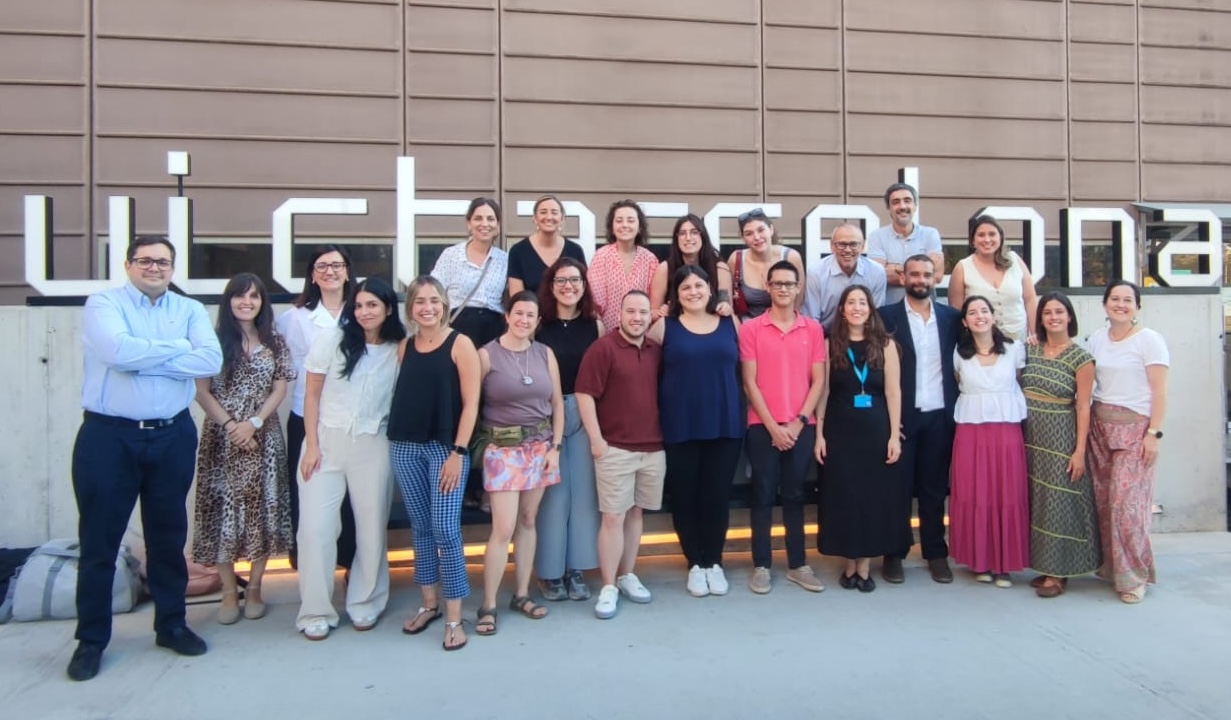
Students of the University Master’s Degree in Palliative Care and Supportive Needs at UIC Barcelona are completing today their clinical simulation week at the university’s Comprehensive Advanced Simulation Centre (CISA), a space designed to reproduce real-life healthcare situations with a high degree of realism.
Over the course of the week, students have worked in a safe, high-fidelity environment on a range of paradigmatic clinical scenarios in palliative care, both in outpatient and hospital settings. The sessions have combined the participation of simulated patients, played by actors, with the use of mannequins and advanced technology that makes it possible to recreate complex situations in a controlled and realistic way.
This methodology has given students the opportunity to face demanding clinical cases before encountering them in real professional practice. Through simulation, they have trained decision-making, communication with patients and families, interdisciplinary teamwork and the ability to respond to situations of high clinical and emotional complexity.
One of the central elements of this learning experience has been debriefing, a space for reflection after each scenario that allows students to analyse the decisions made, identify areas for improvement and consolidate the learning acquired. This process promotes deeper, more reflective training focused on continuous improvement.
Clinical simulation goes far beyond the training of technical skills. In the field of palliative care, it is a particularly valuable tool for developing essential competencies such as empathy, active listening, clinical reasoning, leadership, communication in difficult situations and person-centred care focused on individual needs.
The master’s degree’s commitment to excellence in clinical simulation is one of the programme’s key distinguishing features. Its aim is to train professionals who are prepared to provide palliative care of the highest quality: safe, humane and interdisciplinary care capable of responding to the needs of people with advanced illness and their families.